Why Are Semiconductor Precision Parts Essential for Modern Technology?
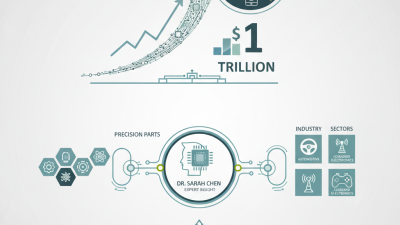
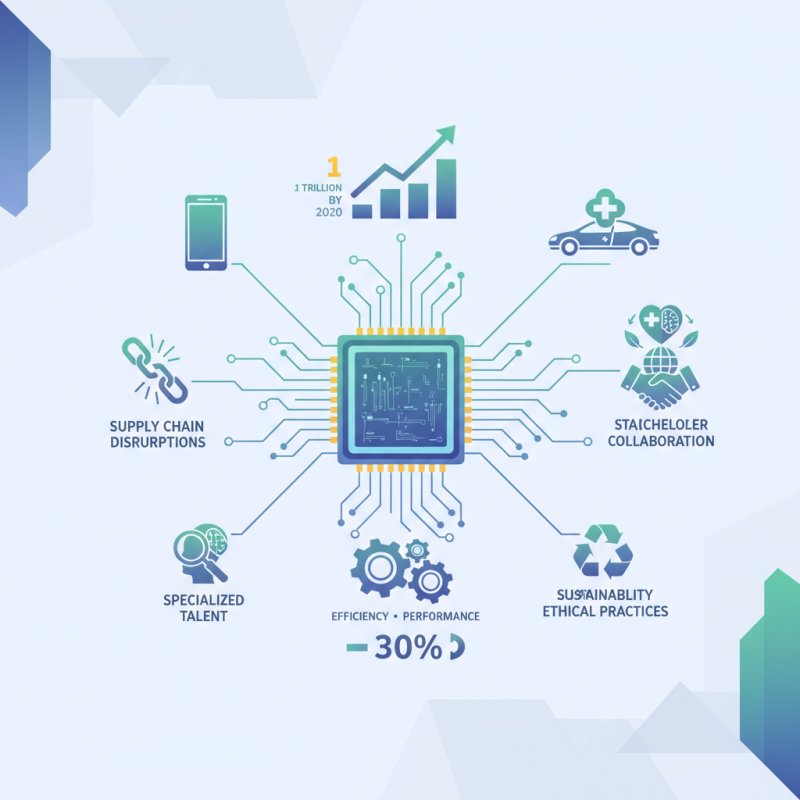
The significance of Semiconductor Precision Parts is underscored by their critical role in today's technology landscape. According to a recent report by the Semiconductor Industry Association, the global semiconductor market is projected to reach $1 trillion by 2030. These tiny components drive advancements in sectors like consumer electronics, automotive, and healthcare.
Without high-quality semiconductor precision parts, innovation would stall. Devices like smartphones and electric vehicles depend on these parts for efficiency and performance. A study from McKinsey & Company highlights that companies investing in advanced semiconductor technology can see productivity gains of up to 30%. However, the industry faces challenges, including supply chain disruptions and the need for specialized talent.
Reflecting on the industry's growth, there is a pressing need for stakeholder collaboration. It’s not enough to produce semiconductor precision parts; we must also ensure sustainability and ethical practices. The future landscape of technology relies on addressing these complexities.
Importance of Semiconductor Precision Parts in Modern Electronics
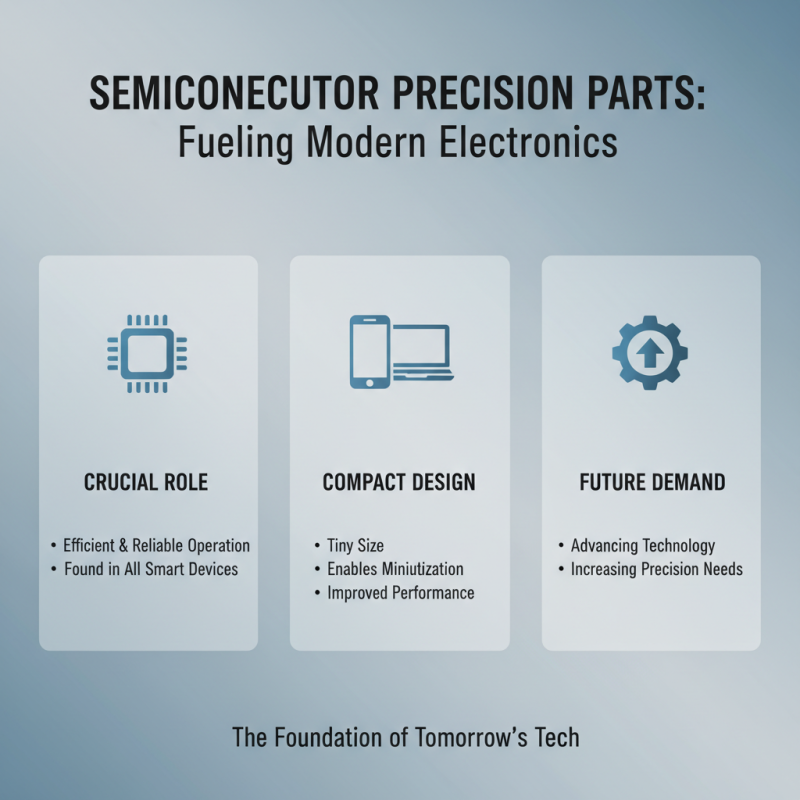
Semiconductor precision parts play a crucial role in modern electronics. These components ensure that devices operate efficiently and reliably. They are found in smartphones, computers, and various smart gadgets. The tiny size of these parts allows for more compact designs. This contributes to the overall performance of devices. As technology advances, the demand for precision increases.
However, producing semiconductor parts isn't without challenges. Even a minor imperfection can lead to device failures. This highlights the need for stringent quality control measures. Manufacturers must continuously innovate to meet rising standards. Expertise in materials and design is essential for ensuring precision. Many engineers face tough decisions regarding designs that balance complexity and cost-effectiveness.
There can be discrepancies in production processes. Even slight variations can impact performance. It raises questions about efficiency in the supply chain. Addressing these issues requires collaboration between experts and manufacturers. They work together to find reliable solutions that meet modern demands. The future of technology depends on these intricate semiconductor parts.
Role of Precision Parts in Enhancing Device Performance and Efficiency
Precision parts in semiconductors are crucial for enhancing device performance. They ensure that electronic components function efficiently. Small variations in dimensions can lead to significant performance issues. This is particularly true in microprocessors, where precision affects speed and heat dissipation.
The right precision can improve energy efficiency. When semiconductor parts fit perfectly, less energy is wasted as heat. This is vital for smartphones, computers, and electric vehicles. However, achieving this precision is a challenge. Manufacturers must invest time in quality control. Sometimes, tiny errors slip through, affecting the final product.
Moreover, precision parts can lead to longer lifespans for electronic devices. Durable components can withstand stress better. But not all manufacturers prioritize these standards. In pursuit of lower costs, some create inferior products. This can compromise device reliability in the long run.
Why Are Semiconductor Precision Parts Essential for Modern Technology?
| Dimension |
Importance |
Impact on Performance |
Examples of Applications |
| Precision Tolerance |
Ensures reliable electrical connections |
Reduces device failure rate |
Smartphones, Laptops |
| Surface Finish |
Enhances thermal efficiency |
Improves heat dissipation |
High-performance computing |
| Dimensional Stability |
Maintains performance under stress |
Increases lifespan of components |
Automotive electronics, Aerospace |
| Material Composition |
Ensures conductivity and durability |
Enhances overall efficiency |
Consumer electronics, Industrial machines |
Impact of Semiconductor Precision Parts on Emerging Technologies
Semiconductor precision parts play a crucial role in driving emerging technologies forward. According to a report from the Semiconductor Industry Association, the global semiconductor market is projected to reach $1 trillion by 2030. This growth highlights the importance of these precision components in the development of advanced applications, such as artificial intelligence and the Internet of Things (IoT). Many devices rely on microchips, sensors, and other semiconductor components to function effectively.
In industries like healthcare, precision parts enable the creation of sophisticated diagnostic tools. For example, advanced imaging devices depend heavily on high-quality semiconductors. These components ensure accuracy and reliability in critical medical processes. However, the reliance on semiconductor precision brings challenges. Supply chain disruptions can impact production schedules. The COVID-19 pandemic has shown how fragile this supply chain can be. Despite advancements, businesses must reflect on their dependency on these technologies.
Additionally, the automotive sector is transforming thanks to semiconductor innovations. Electric and autonomous vehicles rely on precision parts for performance and safety. A study indicates that electric vehicles could contain over 3,000 semiconductor components. The challenge remains to balance performance with cost-effectiveness. As technology evolves, the demand for more sophisticated semiconductor solutions grows, pushing companies to innovate continually.
Impact of Semiconductor Precision Parts on Emerging Technologies
Challenges in Manufacturing High-Quality Semiconductor Components
The manufacturing of high-quality semiconductor components is fraught with challenges. Precision is key in this intricate process. Even minor deviations can lead to significant failures. Contaminants in the manufacturing environment can compromise cleanroom standards. The impact of impurities on semiconductor performance is well-documented. With smaller transistors, the tolerances become even tighter.
Another critical challenge is the complexity of the production process itself. Advanced technology and equipment are required, which can be prohibitively expensive. Not every facility can afford such advanced capabilities. Staff training is also a major concern. Skilled technicians need a deep understanding of semiconductor physics and engineering. Without this expertise, quality can suffer greatly.
Moreover, ongoing innovations mean that manufacturers must adapt rapidly. Keeping pace with market demands and technological advancements is tough. If a company fails to innovate, it risks falling behind. Balancing quality with production speed is a constant struggle. Each decision can affect yield rates and profit margins. This dynamic landscape requires not just technical skills but also strategic thinking.
Future Trends in Semiconductor Precision Part Development and Innovation
The future of semiconductor precision parts is poised for dramatic change. Advancements in nanotechnology will drive innovations, allowing for smaller, more efficient components. This shift may enhance performance but comes with its own set of challenges. As designs become intricate, manufacturers must ensure quality and reliability.
Sustainability is also a hot topic in this field. Reducing waste and energy consumption will become essential. New materials and recycling processes must be explored. This can be both an opportunity and a hurdle. Balancing innovation with eco-friendly practices is not straightforward.
Furthermore, the rise of artificial intelligence and machine learning could reshape manufacturing processes. Automation may streamline production, but fear of over-reliance exists. Workers might need new skills to adapt to these changes. Continuous learning is crucial in this evolving landscape. Staying ahead requires constant reflection on how technology affects jobs and society.