Why Grinding Precision Parts are Essential for High Quality Manufacturing?
In today's manufacturing landscape, the importance of Grinding Precision Parts cannot be understated. These components ensure that products meet high standards of quality and reliability. The process of grinding allows for precise dimensions and surface finishes that are critical in industries ranging from electronics to medical devices.
At the upcoming 2026 Canton Fair, manufacturers will showcase innovations emphasizing advanced manufacturing techniques. The integration of AI in procurement processes highlights the increasing demand for high-quality suppliers who can meet stringent certifications like ISO and CE. However, even with these advancements, challenges remain. Not all manufacturers can achieve the desired precision, reflecting a gap that needs addressing.
The demand for Grinding Precision Parts signifies a broader trend towards quality over quantity. Efficient operations and improved technologies must overcome barriers to deliver superior components. As we move forward, it will be essential for manufacturers to continuously refine their processes, ensuring that every part produced meets the required precision standards. This ongoing reflection will drive the industry toward excellence and sustainability in manufacturing.
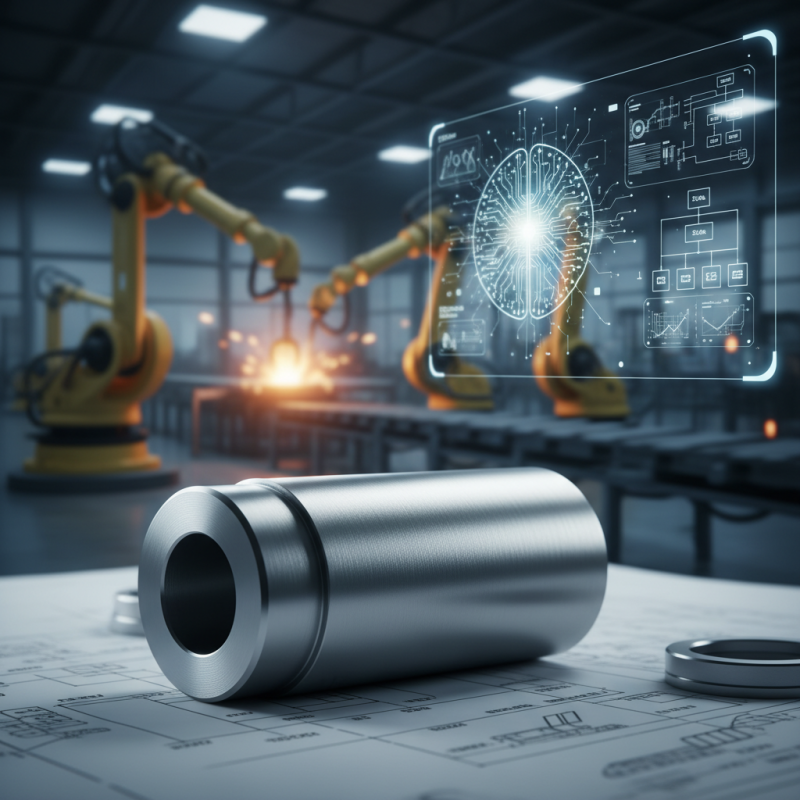
Importance of Precision Parts in Manufacturing Processes
In modern manufacturing, precision parts play a critical role. These components directly impact the performance and reliability of the final product. High tolerance levels ensure that parts fit together seamlessly. A small mismatch can lead to significant issues down the line.
Achieving precision often requires advanced machinery. Grinding is one effective method for ensuring dimensional accuracy. It can produce smooth surfaces and sharp edges. However, maintaining this equipment can be challenging. Regular maintenance schedules can help, but even then, wear and tear occur. It's essential to monitor equipment condition frequently.
Tips for ensuring precision in manufacturing:
- Use quality materials to reduce defects.
- Train staff on best practices, ensuring a knowledgeable workforce.
- Implement regular quality checks during the production process.
Precision parts are vital, yet they come with challenges. Sometimes, even minor errors can compromise a project. Therefore, a culture of constant improvement is essential. Empowering teams to identify and fix mistakes can lead to better outcomes.
Importance of Precision Parts in Manufacturing Processes
Role of Grinding in Achieving Precision in Parts
In the world of aerospace and automotive manufacturing, grinding precision parts is vital. Grinding ensures that components meet strict tolerances. According to a recent industry report, precision grinding can achieve tolerances within ±0.0001 inches. This level of accuracy is essential for parts that operate under high stress.
The role of grinding in achieving precision cannot be overstated. It minimizes surface irregularities and enhances the component’s overall performance. For example, a survey from a manufacturing association indicates that about 40% of part failures relate to machining imperfections. This highlights the importance of precise grinding in preventing costly failures.
However, challenges persist. Some manufacturers still overlook the value of precise grinding, leading to subpar quality. An analysis shows that companies investing in high-precision equipment see a 25% reduction in defect rates. Reflecting on this, it is clear that underestimating grinding can compromise product reliability. Attention to detail in the grinding process can lead to significant improvements in quality and longevity.
Factors Influencing the Quality of Ground Parts
Grinding precision parts play a key role in manufacturing. Many industries rely on these components for their quality and effectiveness. However, several factors influence the quality of ground parts.
One essential factor is the grinding machine's accuracy. A machine that operates at tolerances within 0.001 inches ensures high precision. According to a 2022 industry report, machines with higher accuracy increase part performance by up to 30%. The use of advanced grinding wheels can also impact the surface finish. Utilizing the right abrasives leads to smoother finishes and improved durability. However, choosing the correct material is often overlooked.
Operator skill cannot be ignored. The best machines are only as good as the person operating them. Training programs vary widely across industries. A recent study found that skilled operators can enhance productivity by about 15%. In contrast, poorly trained staff often result in defects and subpar quality. A significant increase in rework or scrapped parts occurs without proper skills. Continuous evaluation of operator performance is vital yet frequently neglected.
Applications of Precision Ground Parts in Various Industries
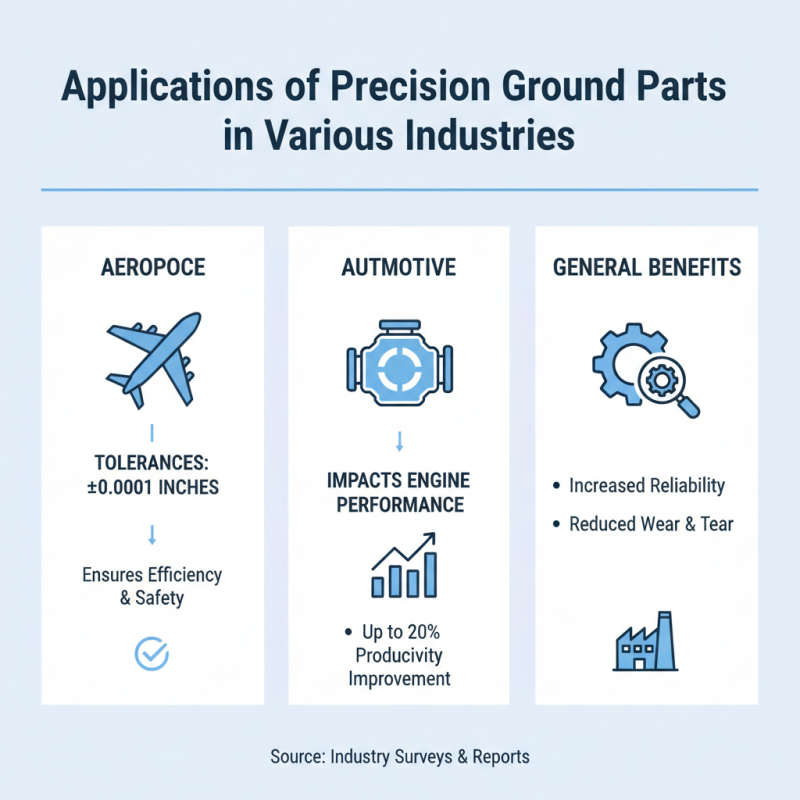
Precision ground parts play a crucial role in various industries. In aerospace, for example, tolerances can be as tight as ±0.0001 inches. This precision ensures the efficiency and safety of aircraft. In the automotive sector, precision components impact engine performance directly. According to recent industry surveys, companies using precision parts report up to 20% improvement in productivity.
The medical industry also relies heavily on these components. Surgical instruments must be precise and durable. The failure rate for non-precision parts can reach 15%, leading to serious consequences. In the electronics sector, precise machining is mandatory. With devices becoming smaller, the demand for miniaturized parts is skyrocketing. Studies show that precision-ground electronics parts improve lifespan by around 30%.
Despite advancements, the road to perfection is not smooth. Some manufacturers struggle to meet precision standards. Quality control measures may not always catch flaws. As industries evolve, the demand for precision will only grow. Addressing these challenges can lead to better products and increased customer satisfaction.
Benefits of High Precision Parts on Overall Product Quality
High precision parts significantly enhance the overall product quality in manufacturing. According to a report by the National Institute of Standards and Technology (NIST), precision machining can reduce the variance in parts by over 70%. This reduction leads to better-fitting components, which, in turn, improves the performance of the final product. For industries like aerospace, where safety is paramount, even the slightest deviation can lead to catastrophic failures.
Moreover, high-precision parts often decrease the rate of defects. A study published in the Journal of Manufacturing Science found that products made with precision components experience a defect rate reduction of up to 50%. This improvement is crucial for maintaining competitive advantage. However, achieving such precision requires significant investments in technology and skilled labor. Many manufacturers struggle with the upfront costs and the necessary training.
The benefits of precision parts are clear yet challenging to realize consistently. It’s not just about buying expensive machines; it's also about understanding the nuances of precision engineering. Operational inefficiencies may lead to inconsistencies, reminding us that precision isn't just a goal—it's an ongoing challenge.
Why Grinding Precision Parts are Essential for High Quality Manufacturing? - Benefits of High Precision Parts on Overall Product Quality
| Dimension |
High Precision Parts |
Standard Parts |
Impact on Quality |
| Tolerance Levels (mm) |
±0.001 |
±0.01 |
Higher precision improves fit and function |
| Surface Finish (Ra) |
0.2 |
1.0 |
Better surface finish reduces friction |
| Material Consistency (%) |
99.9 |
95.0 |
Consistent material enhances durability |
| Production Time (hrs) |
10 |
15 |
Faster production leads to reduced costs |
| Failure Rate (%) |
0.1 |
2.5 |
Lower failure rates ensure reliability |