Top Optical CNC Parts for Precision Engineering Applications?
In the realm of precision engineering, the role of Optical CNC Parts is increasingly significant. These components enable the development of high-quality optical systems. Their accuracy and reliability create a foundation for advanced applications in various industries.
Engineers often rely on Optical CNC Parts for projects requiring meticulous attention to detail. This demand stresses the importance of sourcing quality materials and craftsmanship. Nevertheless, businesses sometimes overlook the potential trade-offs between cost and quality. Making smart choices is essential for long-term success in projects involving optics.
Moreover, it's essential to stay updated on industry trends and technological advancements. The landscape of CNC machining shifts rapidly, and continuous learning is vital. Engaging with expert opinions and case studies can guide decisions. Investing in knowledge leads to better outcomes. The journey to mastering precision in engineering is never complete.
Essential Characteristics of Optical CNC Parts in Engineering
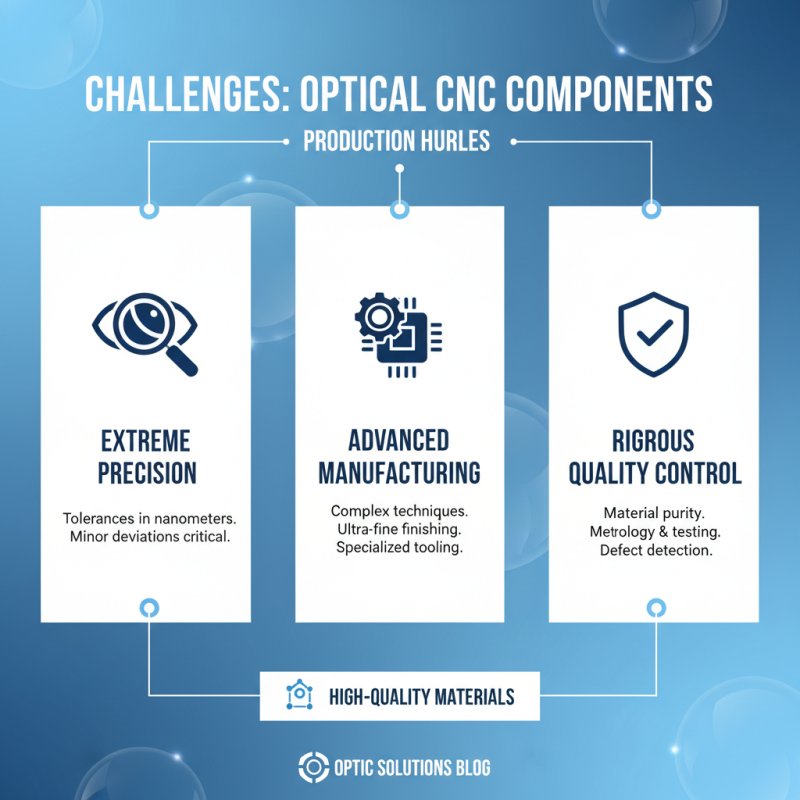
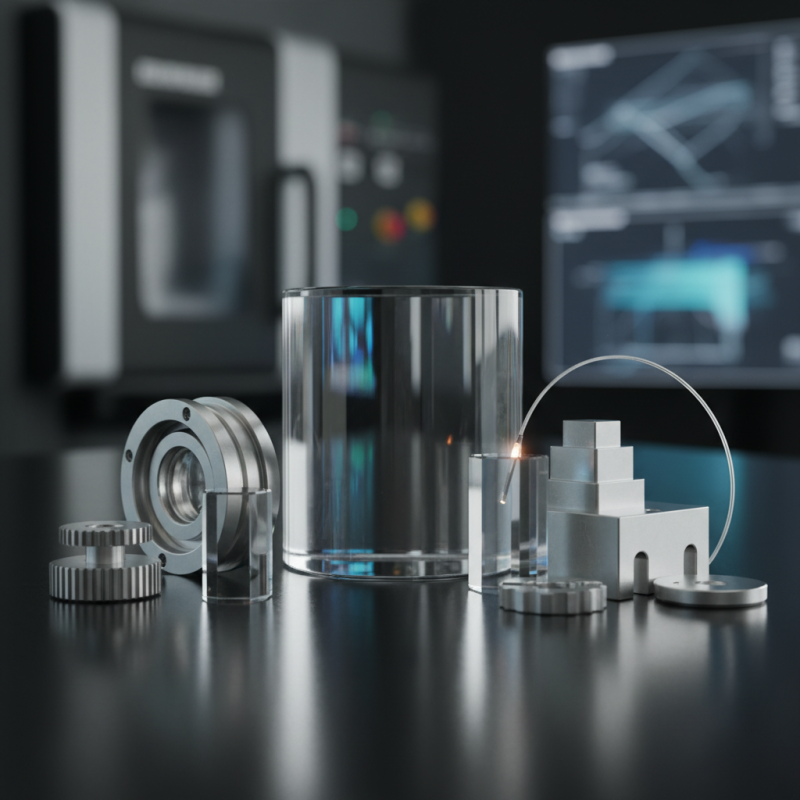
Optical CNC parts are crucial in precision engineering. Their ability to achieve high accuracy sets them apart. These components often go beyond standard mechanical parts. They require tight tolerances, fine finishes, and specific materials.
An essential characteristic is the use of advanced optics. High-grade materials like glass and specialized plastics are common. These materials enhance light transmission and minimize distortions. However, the complexity of designing these parts can pose challenges. Engineers must consider factors like thermal stability and optical alignment.
Tips: Always prototype before full production. This helps identify potential issues. Consider using simulation software to predict performance. Testing under various conditions can uncover imperfections.
Moreover, reliability matters significantly in engineering. Choosing optical CNC parts based on performance data is advisable. However, some parts may not always fulfill their intended function due to unforeseen factors. Continually assess and reevaluate the effectiveness of optical components in your projects to refine the design and manufacturing process.
Top Optical CNC Parts for Precision Engineering Applications
| Part Type |
Material |
Dimensional Tolerance |
Surface Finish |
Common Applications |
| Lens Holders |
Aluminum |
±0.01mm |
Anodized |
Optical Systems, Cameras |
| Optical Mirrors |
Quartz Glass |
±0.005mm |
Polished |
Laser Systems, Telescopes |
| Prisms |
BK7 Glass |
±0.01mm |
Coated |
Optical Instruments, Sensors |
| Beam Splitters |
Fused Silica |
±0.01mm |
Anti-reflective Coated |
Optical Communication, Imaging |
| Lens Elements |
High-index Glass |
±0.005mm |
Cemented |
Cameras, Projectors |
Common Materials Used for Optical CNC Components
In precision engineering, optical CNC parts play a crucial role. The materials used for these components significantly affect their performance and durability. Among the most common materials, optical glass is favored for its high transparency and low distortion. According to the International Society for Optics and Photonics, about 70% of optical instruments use glass in their fabrication. This material ensures that light passes through without significant loss.
Another popular choice is aluminum. It is lightweight, offers excellent machinability, and has a good strength-to-weight ratio. Reports indicate that about 25% of CNC optical components include aluminum due to its versatility. Aluminum frames support glass optics in various applications, from laser cutting to imaging systems. Yet, it can be prone to scratching, which is a drawback.
Acrylic, or PMMA, is also frequently used. It is less expensive than glass and offers a good optical quality. Nevertheless, it has lower resistance to scratches and UV light. In production settings, choosing materials often balances performance with cost. Each material has strengths and weaknesses that must be considered. The industry is continuously exploring better alternatives to enhance performance while managing production costs effectively.
Applications of Optical CNC Parts in Precision Engineering
Optical CNC parts have become crucial in precision engineering.
These components are essential in sectors like aerospace, medical devices, and telecommunications.
According to a recent market analysis, the demand for optical components in CNC machining is projected to grow at a CAGR of 8.2% over the next five years.
This growth reflects their importance in achieving high precision and accuracy.
In aerospace, for example, optical CNC parts facilitate the production of critical components.
These parts must meet stringent regulations and standards. The medical device industry relies on optical components for imaging systems and diagnostic equipment.
These systems require exceptional reliability and precision, ensuring patient safety.
Tip: When selecting optical CNC parts, consider not only the specifications but also the manufacturer's reputation.
Quality can vary significantly. Moreover, not all optical components are suitable for every application.
In telecommunications, optical parts optimize signal clarity and reduce latency. Precision is paramount in this field.
Yet, even minor mistakes in the production process can lead to significant issues. Recent studies emphasize a need for rigorous quality checks to avoid costly errors.
Tip: Always review material certifications and processing methods.
This adds an extra layer of quality assurance. Investing in training for CNC operators can also enhance precision and reduce variations.
Key Manufacturing Processes for Optical CNC Parts
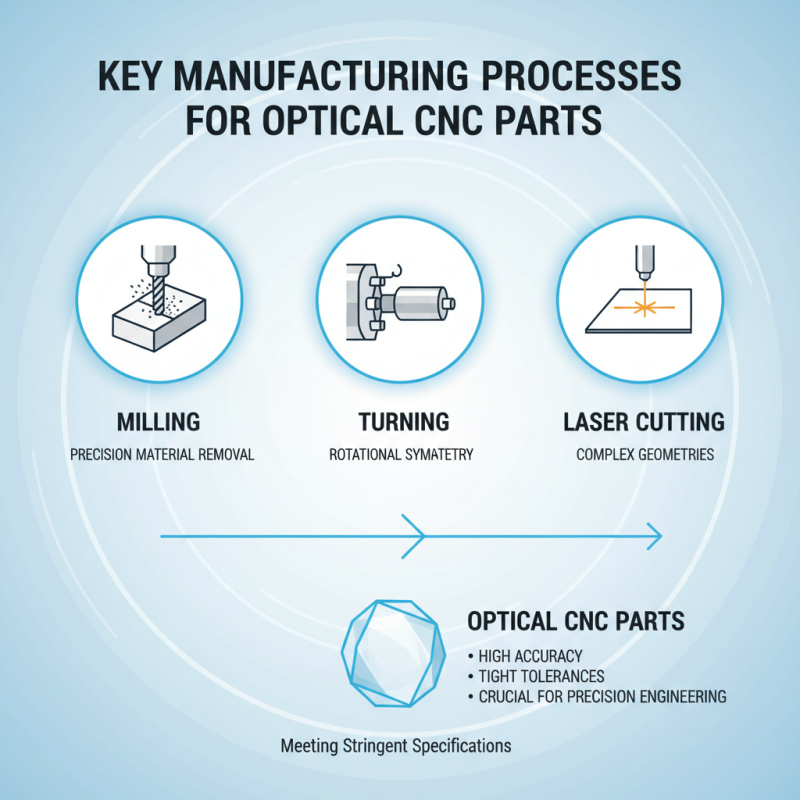
Optical CNC parts are crucial for precision engineering applications. The manufacturing process for these parts demands a high level of accuracy and attention to detail. Common techniques include milling, turning, and laser cutting. These methods allow for the creation of complex geometries and intricate designs that meet stringent specifications.
Milling is often favored for its versatility. This process can produce fine features and achieve tight tolerances. However, operators must be trained to optimize parameters. A minor error can lead to unusable parts. Turning is another important method, especially for cylindrical parts. It provides a smooth finish and can handle various materials.
**Tip:** Always verify the alignment before starting a CNC job. Proper calibration can prevent costly mistakes.
Laser cutting is popular for its speed and efficiency. It allows for precise cuts without material loss. However, heat-affected zones can alter the material properties. This required further inspection.
**Tip:** Regularly inspect laser settings to maintain quality.
Using these processes effectively requires experience and knowledge. Each technique has its strengths and weaknesses; understanding them is vital for successful production. Balancing speed and precision is key in achieving high-quality optical CNC parts.